Everything looked familiar: Known compound. Known polymorphs. Known powder X-ray diffraction patterns.
And then… one unexpected peak appears in the XRPD pattern.
Where does it come from?
A new polymorph?
A known form that behaves slightly differently?
Something else?
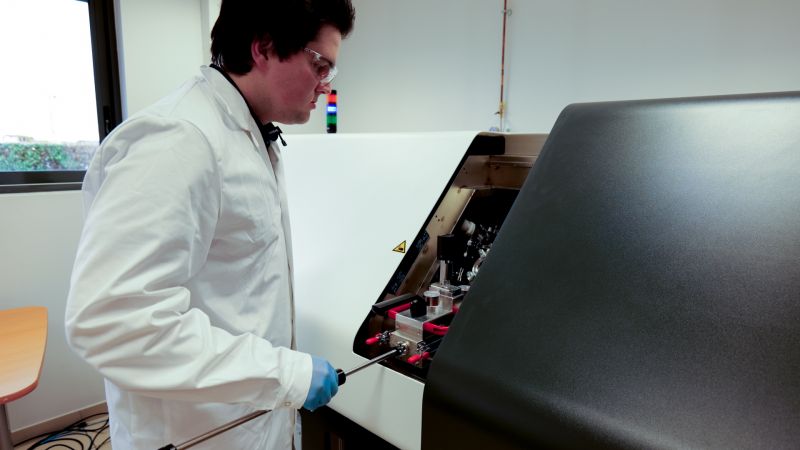
This is where Electron Diffraction can change the way we investigate solid-form questions.
Instead of trying to extract structural information from the powder pattern alone, we can go back to the individual crystals.
Available reference polymorphs can be analysed by Electron Diffraction one crystalline particle at a time.
For each form, this provides its crystal structure at the single-crystal level — even from crystals far too small for conventional single-crystal X-ray diffraction.
And once you have the crystal structure, you can calculate the corresponding theoretical powder X-ray diffraction pattern.
The investigation then becomes much more direct:
1️⃣ Analyse the reference polymorphs by Electron Diffraction
2️⃣ Determine their crystal structures
3️⃣ Calculate their theoretical XRPD patterns
4️⃣ Compare them with the experimental powder pattern
5️⃣ And determine whether one of the known forms can explain that mysterious peak
Instead of asking “What could this peak be?”, we can ask “Which crystal structure generates it?”
Electron Diffraction does not replace powder X-ray diffraction.
It gives XRPD something extremely valuable when a powder pattern becomes difficult to interpret: structural information from an individual crystal.
Sometimes, one tiny peak is enough to raise a big question.
And sometimes, one tiny crystal is enough to answer it.
ElectronDiffraction XRPD Polymorphism SolidState Pharma DrugDevelopment